
Canada is full of rules that have quietly disappeared from the statute books. The reasons vary: some were far too odd to still make sense today; others were disturbingly harsh and rooted in prejudice. Here are ten forgotten Canadian laws that once existed.
Which one surprises you the most?
Sunday shopping ban

Before the 1980s, buying anything on a Sunday in Ontario was often illegal. Shops had to stay closed under the Lord’s Day Act — a law from 1906 that made Sunday a sacred day of rest.
The law was introduced back in 1906 and the fight against it went on for decades. The huge argument was about whether poor workers deserved a day off — until the Supreme Court of Canada struck it down in 1985.
The crime comics ban

In the 1940s, after a wave of comic-book crime scares, Ottawa passed a law that banned crime comics — stories that showed crime too clearly.
It’s hard to believe that something so small could be banned by federal law. But the taboo was real — back then, Canada believed that comics made kids turn to crime.
The witchcraft law (ban on pretending)

The law was introduced in 1892, and every Canadian knew about it: witchcraft, and the pretending of witchcraft, was a punishable offence. You could be arrested if someone believed you were using powers — or that you could foresee the future.
Although the law was introduced in 1892, it wasn’t repealed until 2018. In the final year of its existence, it was used against tarot readers who charged clients for spiritual advice.
The padlock law (a.k.a. the Duplessis regime law)

In the 1930s, Quebec introduced the Padlock Law, which gave police the power to shut down any building that was being used to spread ideas considered harmful in nature, without trial or warning.
Under this law, authorities could padlock a building without proof, causing smaller publications and several small journals to be shut down. Montreal’s Le Devoir was among them.
The 1923 Chinese Immigration Act: exclusion of Chinese immigrants

In 1923, Ottawa rolled out the Chinese Immigration Act. It banned nearly all Chinese immigrants from entering Canada — and the country kept the ban until 1947.
There are also other laws that either banned or controlled Chinese immigrants. But this act was the main one — so harsh that July 1, the day it took effect, came to be known as 1 July “Humiliation Day.”
The Potlatch ban
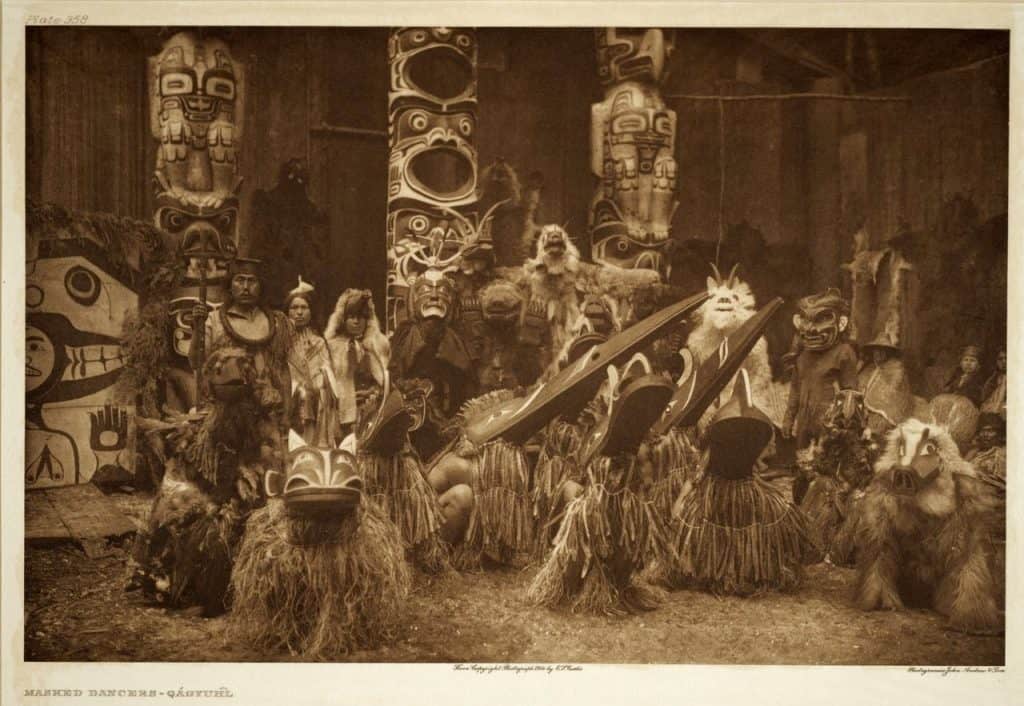
In 1884, the Potlatch Law stepped into place. It banned ceremonies in British Columbia and along the Pacific coast, where Indigenous people shared wealth as a way of marking important occasions.
In 1951, the constitution was amended and the potlatch ban was lifted. But that came too late for many First Nations who had suffered under the law.
Sexual sterilization law

Alberta had a legal framework that allowed forced sterilization in the early 1900s. That law allowed the government to decide whether someone with certain disabilities should be sterilized.
Actually, it was Alberta and British Columbia that had similar laws. Both allowed the state to decide and to sterilize people they believed should not be having children.
The 1919 Hutterite land ownership law

In 1919, Alberta introduced a law aimed at stopping Hutterite settlement. It prohibited the Hutterite colonies from buying land under certain conditions, all in a deliberate effort to stop them from settling permanently.
The law was changed in 1972, yet the early law left a lasting mark. Even today, Hutterites continue to live in Alberta & Saskatchewan and are known for their strong communities.
The margarine color rule

For a long time, people across Canada could not buy margarine that looked like real butter. So the government mandated that margarine had to be white or grey, not yellow.
It wasn’t until the 1940s, when the public pushed back, that the rule was finally dropped. So after that, people could actually buy margarine that looked like the real thing.
Spreading false news

Once there was a law in Canada that made it illegal to spread false news. You could be prosecuted for publishing material known to be false — even if it didn’t result in any harm.
The law remained in the Criminal Code until it was finally struck down by the Supreme Court in 1992, when they said that it threatened free expression.
Sources: Please see here for a complete listing of all sources that were consulted in the preparation of this article.
12 Canadian laws that often surprise U.S. visitors

Canada has a habit of putting some rather strange things into law. Some of these rules are at the federal level, and others are provincial, but all of them have one thing in common.
12 Canadian laws that often surprise U.S. visitors