
Historians may debate who Jesus was, but most agree that he was a real person who walked the earth 2,000 years ago.
The letters of Paul

Paul writes about Jesus as if He was an actual historical person who existed, died by crucifixion, and had disciples. Paul even mentions that he personally knew men who knew Jesus Christ firsthand, including Peter and James.
Jewish historian Flavius Josephus

Scholars widely debate the authenticity of parts of the longer passage, given that Christian scribes could have changed it. Josephus is particularly valuable because he was a non-Christian writing independently of the Church.
Roman historian Tacitus

What makes Tacitus’s account stand out is his deeply hostile attitude toward Christianity. The origin of Tacitus’s knowledge is disputed, but his text supplies a non-Christian confirmation matching the basic account of Jesus’ crucifixion.
The Gospels
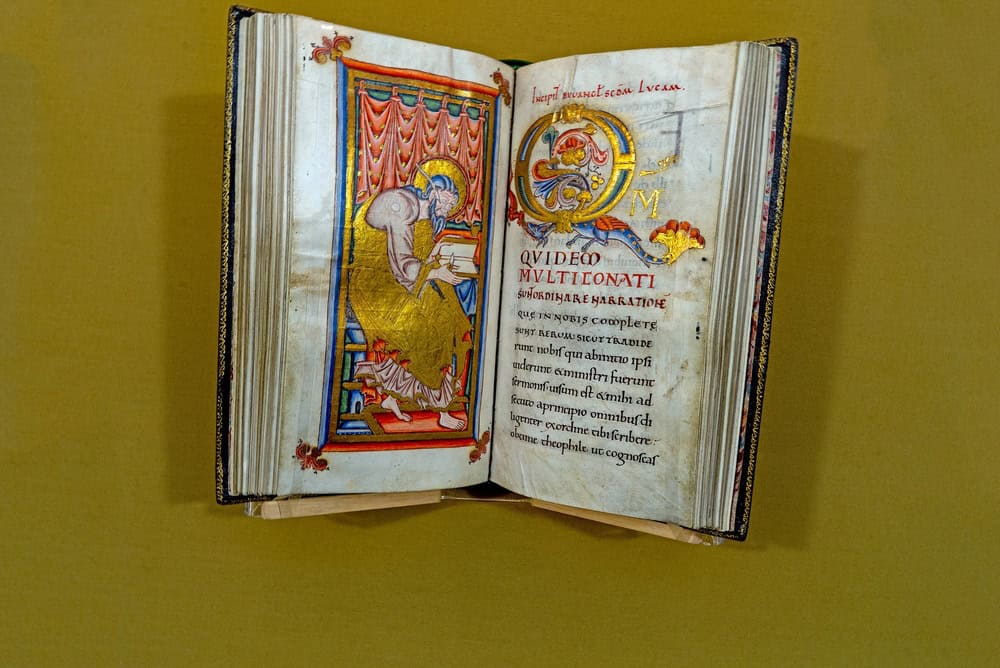
The authors of the Gospels wrote from faith perspectives, but they are studied by historians as ancient sources rather than accepting every single statement as religious fact. They recount traditions relating to a Jewish preacher who gained a following as he taught in Galilee and elsewhere and was put to death in Jerusalem.
Jesus’ awkward baptism

Some historians have argued that because this idea is potentially embarrassing to early Christian proponents, it is unlikely to have been made up. This concept is known as the criterion of embarrassment.
An unlikely end

But the fact that Jesus was crucified by Pontius Pilate is one of the core elements of the earliest traditions about him. Crucifixion is mentioned in these ancient sources because it happened; historians also believe that Jesus was crucified because it makes sense politically.
Executing Jesus is one of the few things about his life that historians consider an absolute certainty.
The Babylonian Talmud

The Babylonian Talmud was compiled centuries after Jesus’ life from Jewish rabbinic writings. One passage names a man called Yeshu. Sanhedrin 43a says he was executed on the eve of Passover after being accused of sorcery and leading Israel into apostasy. Some believe this passage refers to Jesus of Nazareth and presents evidence that Jewish tradition remembered Jesus’ execution.
Historical evidence for Pontius Pilate

Although this does not prove Jesus existed directly, it does independently verify the name and title of a key figure mentioned in the Gospels, thereby corroborating that Jesus was placed within a specific historical context by the Gospel writers.
Historical context of Jewish messianic movements

Jesus of Nazareth is understood by Christians to belong within this general historical milieu as a Jewish teacher among those who preached about God’s kingdom. Jesus’ alleged ministry corresponds with what is known about religious or popular developments during this time. Therefore, the general premise of the narrative is historically plausible.
Pliny the Younger’s letter

This Roman letter confirms that organized groups were worshiping Christ during the early part of the second century. Pliny did not research Jesus’ life firsthand, but his letter does serve as evidence independent of Christian sources for the movement’s existence.
Lucian of Samosata

Lucian was strongly opposed to Christianity and had no motive to propagate Christian doctrine. His writings prove Jesus was seen as a historical founder by at least one non-Christian writer more than 100 years after his death.
Like our content? Be sure to follow us.
12 lessons from Jesus that hold up even outside religion
